5 Reasons ASML Keeps the EUV Edge China Can’t Match
By Trendy News | Published on November 10, 2025
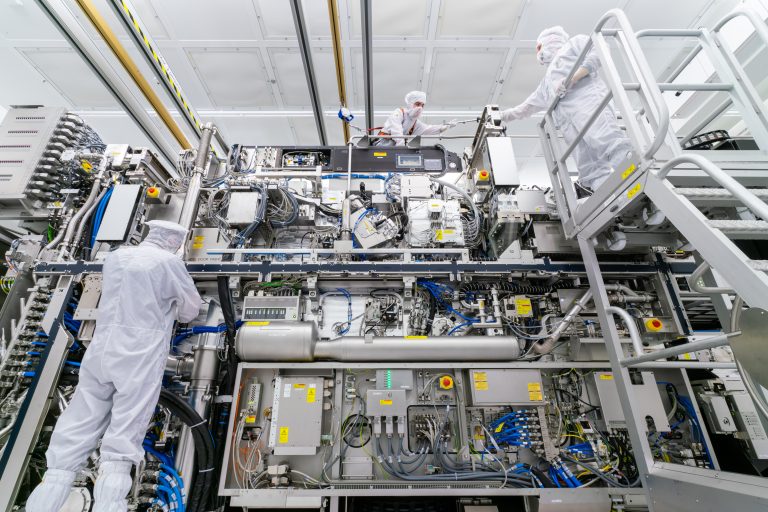
ASML stands as the global leader in extreme ultraviolet (EUV) lithography. While China and other nations are investing billions to catch up, ASML’s technology remains years ahead. Here are the top five reasons why ASML continues to dominate this field — and why replicating its success isn’t easy.
1. The 13.5nm EUV Light Source: A Marvel of Precision
ASML’s EUV systems use a 13.5nm wavelength light generated through a laser-produced plasma (LPP) process. Tiny tin droplets are blasted by high-energy lasers inside a vacuum chamber, producing EUV photons.
This system’s complexity — from droplet control to plasma stabilization — makes it nearly impossible for rivals to replicate. Even minor instability can cause enormous losses in throughput and yield.
2. High-NA Optics and ZEISS Collaboration
ASML’s partnership with ZEISS is a key differentiator. ZEISS manufactures ultra-smooth mirrors for ASML’s High-NA EUV systems. Each mirror weighs several tons and must be polished to atomic-level precision.
These optics allow ASML’s systems to print patterns as small as a few nanometers — a feat unattainable without decades of optical engineering expertise.
3. A Global Network of Over 100 Specialized Suppliers
ASML leads an intricate web of more than 100 suppliers. From precision lasers by Cymer (a U.S. firm acquired by ASML) to specialized materials and sensors, the company integrates cutting-edge components from around the world.
This vast, trusted ecosystem took decades to build — and replicating it would require not just money, but deep partnerships and technical trust.
4. Decades of Lithography Innovation and Transition
Before conquering EUV, ASML mastered immersion lithography using 193nm light. That foundational expertise allowed the company to transition smoothly into EUV technology while maintaining precision and performance standards.
Competitors, starting from scratch, face an uphill battle without this accumulated engineering experience.
5. China’s Multi-Layered Technological Gap
ASML’s edge is not a single innovation — it’s a combination of technologies, processes, and partnerships. China lacks the advanced optics of ZEISS, the high-power laser systems of Cymer, and the collaborative infrastructure that ASML nurtured for decades.
Even if one part of the puzzle is solved, the rest of the ecosystem — calibration, testing, and manufacturing precision — still lags behind.
Why This Matters
For chipmakers, ASML’s EUV monopoly defines who can build the world’s fastest chips. For policymakers, it underscores how technological dominance is tied not just to one company — but to an entire global ecosystem.
Suggested SEO Enhancements
- Target keywords: EUV lithography, ASML technology, High-NA optics, China chipmaking gap.
- Include outbound links to authoritative sources like TrendForce and ASML.com.
- Embed related infographics or schematics for better on-page engagement.


Post a Comment